
Car deliveries during the nine-day period saw sharp year-on-year (double-digit increase for most automobile companies.

The Russian-Ukraine war can hit the global supply chains that are already constrained due to the pandemic and the worst impact will be on ongoing chip shortage because the warring nations brutally control supplies of key raw materials that go into making semiconductors, warns a report. Since Russia controls as much as 44 per cent of global palladium suppplies, Ukraine produces a significant 70 per cent of the global supply of neon -- the two key raw materials that go into making chips. The markets can expect the global chip shortage, that began with the pandemic, to worsen if the military conflict lingers on, says a Moody's Analytics report on Friday.

Around 23 per cent of all units sold by the company in the domestic market currently are diesel cars.

Investors have gained Rs 335,770.71 crore in two days of market rally, with the Sensex scaling its fresh lifetime peak on Wednesday. Rising for the second day, the 30-share BSE benchmark jumped 476.11 points or 0.82 per cent to close at its new all-time high of 58,723.20. During the day, it gained 529.97 points to 58,777.06, its intra-day record.
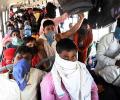
The auto ancillary industry - one of the worst hit due to the labour exodus - will need at least three months to get its factories up and running.
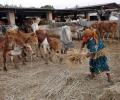
Normal monsoon makes FMCG, automobile and consumer durable companies optimistic about growth prospects

Cars and two-wheelers attract 28% GST and a cess in the range of 3-22%, taking the effective tax rate to up to 50%.

Passenger vehicle dispatches from factories to dealers declined 13 per cent to the lowest level in five years in December last year as the industry continued to face production issues due to semiconductor shortage, auto industry body SIAM said on Friday. Passenger vehicle dispatches last month stood at 2,19,421 units compared to 2,52,998 units in December 2020. While acknowledging that the chip shortage situation is not expected to dramatically change in the short term, the industry body expressed hope that things will improve soon.

While commercial vehicles are expected to benefit from strong replacement demand, the two-wheeler and tractor segments are expected to gain from a recovery in the rural economy.

India's economy is showing signs of slowdown, with hi-frequency indicators like industrial output posting subdued growth and automobile sales touching historical lows.

Ratan Tata said he continued to feel the need to support young entrepreneurs who were keen to unleash the Indian tiger.

Bajaj Finserv was the top loser in the Sensex pack, shedding over 2 per cent, followed by Infosys, Tech Mahindra, UltraTech Cement and IndusInd Bank. On the other hand, Dr Reddy's, Bajaj Auto, Sun Pharma, Asian Paints and NTPC were among the gainers. NSE Nifty lost 41.50 points to end at 15,680.

This State-corporate 'cooperation' didn't begin with the arrival of the Modi government.
Many of the big licences, contracts, and even environmental clearances for the Adani group had come in the UPA's time, points out Shekhar Gupta.
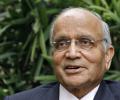
Company managements need to "curtail the kind of expenditures on themselves personally" with the COVID-19 pandemic highlighting the need to build internal resources with a frugal style of functioning, Maruti Suzuki India chairman R C Bhargava said on Tuesday. Addressing shareholders in the company's annual general meeting held virtually, he also termed as "a good development for the whole of industry" recent shareholder actions that did not approve expenditures by management on themselves, without specifying details. In the wake of the pandemic, building internal resources has to become a priority of industry and companies.

Electric two-wheelers have zipped past the half-a-million registration mark and achieved a market penetration of 4 per cent at the fag end of Calendar 2022, according to data released by VAHAN. According to VAHAN data for the year (until December 27), 560,000 two-wheelers were registered in the country, up a staggering fourfold over 2021, when only 136,000 were registered, and when electric vehicle penetration was a mere 1.05 per cent. The total number of two-wheelers (internal combustion engine, or ICE, and electric) registered so far in 2022 stands at 14.5 million, up only 12.7 per cent over the previous calendar year.

Their favourite alternatives: Malaysia, Vietnam and the Philippines. Note, India is missing from that list. And this is despite an attractive financial incentive scheme for OSAT players. The reason, said a senior executive of a US chip company who had a meeting in Taiwan just a few weeks ago, is that "they want more predictability in government policy because they plan to put in big money."

New participants included Chinese players such as Great Wall Motors and Haima Automobile along with Olectra.

As per SIAM data, vehicle sales across categories, including passenger vehicles and two-wheelers and commercial vehicles stood at 18,21,490 units last month as against 23,82,436 units in August 2018, a fall of 23.55 per cent.

Automobile dealers' body FADA on Thursday said passenger vehicle (PV) retail sales in March witnessed a year-on-year growth of 28.39 per cent to 279,745 units, as compared to the year-ago period which saw disruptions in the market due to COVID-19 led lockdown. According to the Federation of Automobile Dealers Associations (FADA), which collected vehicle registration data from 1,277 out of the 1,482 regional transport offices (RTOs), PV sales stood at 217,879 units in March 2020. Two-wheeler sales, however, declined 35.26 per cent to 11,95,445 units last month, as compared to 18,46,613 units in March 2020. Commercial vehicle sales also declined 42.2 per cent to 67,372 units, as against 116,559 units a year ago.

India's crude oil production fell 2.3 per cent in August but natural gas output rose by more than a fifth on the back of output from KG-D6 fields of Reliance-BP, government data released on Wednesday showed. Crude oil production dropped to 2.51 million tonnes in August as output from fields operated by state-owned Oil and Natural Gas Corp (ONGC) dipped. India is 85 per cent dependent on imports to meet its oil needs and the government has been for long looking at ways to raise the domestic output so as to reduce import dependence.

'It says, we are not just an overseas player -- we are Kia India and here for good'

Passenger vehicle exports from India increased 43 per cent in FY22, with Maruti Suzuki India leading the segment with dispatches of over 2.3 lakh units, as per the latest data by industry body SIAM. The total passenger vehicle (PV) exports stood at 5,77,875 units in 2021-22 fiscal, as compared to 4,04,397 units in 2020-21. Passenger car shipments saw 42 per cent growth at 3,74,986 units, while utility vehicle exports rose 46 per cent at 2,01,036 units during the last fiscal, the data by the Society of Indian Automobile Manufacturers (SIAM) showed.

The auto component sector grew at 5-6 per cent last year against a 13 per cent growth in 2012.

India imported goods worth $4.23 billion in June from sanctions-hit Russia, up 6.8 times as compared to last year, as demand for shipments of crude oil grew at the fastest pace during the month. Crude oil worth $3.02 billion was imported in June, which translates into a share of 71 per cent of the total imports from Russia, commerce and industry ministry data showed. Similarly, during the April-June quarter, India's imports from Russia were valued at $9.27 billion, up 369 per cent on year.

US-based Tesla is working through a lot of challenges with the government to launch its products in India, the electric car major's founder and CEO Elon Musk said on Thursday. Responding to a tweet on the company's plans to launch its products in India, Musk tweeted: "Still working through a lot of challenges with the government." Last year, Tesla had sought a reduction in import duties on electric vehicles (EVs) in India.

The bulk of the incremental profits will come from oil & gas and automobile sectors.

Though the workers have not gone on strike, they moved the labour department for not receiving any wage hike since 2015.

TCS was the top gainer in the Sensex pack, rising over 3 per cent, followed by HUL, UltraTech Cement, Nestle India, Kotak Bank, Dr Reddy's and Titan. NSE Nifty surged 157.90 points to 17,234.15.
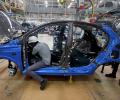
While sales of compact cars, including models such as Swift, Celerio, Ignis, Baleno and Dzire declined, sales of utility vehicles, including Vitara Brezza, S-Cross and Ertiga, increased 26.3 per cent to 19,177 units as compared to 15,178 in the year-ago month.

We need to know that the sources of pollution and the action to be taken are known. But what is needed is to act. Plain and simple. So, focus, on each source and each action; who has to do what and by when

Passenger vehicle wholesale in India increased by 14.19 per cent to 3,10,294 units in October against 2,71,737 units in the same month last year as companies despatched more units to dealers to cater to enhanced demand in the festive season, auto industry body SIAM said on Wednesday. According to the latest data by the Society of Indian Automobile Manufacturers (SIAM), two-wheeler sales also rose 16.88 per cent to 20,53,814 units, compared with 17,57,180 units in the same month last year. Motorcycle sales were at 13,82,749 units as against 11,16,886 units in October 2019, up 23.8 per cent.

It is immediately not clear how GST will impact the mass car market. Experts, however, say the level of tax on smaller cars will have to be at a differential to the sedans.

German car maker Volkswagen was the first company to offer airbags on all its variants in India from the beginning of this year.
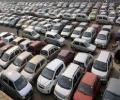
The strong domestic growth for new vehicle sales during 2008-12, which witnessed a compounded annual growth rate of 14 per cent, led to an increased inventory of used cars, thanks to trade-ins.

The Cabinet on Wednesday approved the production-linked incentive (PLI) scheme worth Rs 10,683 crore for textiles sector with an aim to boost domestic manufacturing and exports. The decision was taken in a meeting which was chaired by Prime Minister Narendra Modi. The Cabinet "has approved the PLI scheme for textiles for MMF (man-made fibre) apparel, MMF fabrics and ten segments/ products of technical textiles with a budgetary outlay of Rs 10,683 crore," Textiles Minister Piyush Goyal told reporters.
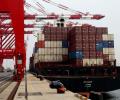
On the back of rising crude oil purchases, India's bill for imports from sanctions-hit Russia jumped 3.5 times in a year in April to $2.3 billion, showed data from the commerce ministry. In April, India's crude oil imports from Russia were valued at $1.3 billion, 57 per cent of India's total inbound shipments from Russia. Other major imported items during the month included coal, soybean and sunflower oil, fertilisers, and non-industrial diamonds. That month, Russia was also the fourth-largest crude petroleum supplier to India, after Iraq, Saudi Arabia, and the United Arab Emirates (UAE).

He says that while 30 per cent of parts must be locally sourced, the supply doesn't yet exist in India to support that

The farmers' agitation against new agri laws will lead to economic loss of over Rs 70,000 crore in the December quarter owing to supply chain disruptions, particularly in Punjab, Haryana and border areas of Delhi, the PHD Chamber of Commerce and Industry said on Thursday. The chamber's president Sanjay Aggarwal said "the 36 days farm agitation so far will have more than Rs 70,000 crore economic loss in the Q3 FY 2020-21 due to...disruption in supply chains and day-to-day economic activities particularly in the progressive states of Punjab and Haryana and border areas of national capital Delhi."
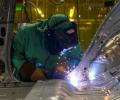
The department for promotion of industry and internal trade (DPIIT) has suggested to the home ministry to allow limited activity in certain sectors such as heavy electricals and telecom equipment with reasonable safeguards. In a letter to Home Secretary Ajay Kumar Bhalla, the department said that these activities are essential to improve the economic situation and provide liquidity in the hands of the people.

Union Minister Nitin Gadkari on Monday said American electric car major Tesla is set to start its operations in India next year and would also look at setting up of a manufacturing unit based on demand. The Road, Transport and Highways minister has been pushing for green fuel and electric vehicles for cutting India's huge Rs 8 lakh crore crude imports. Tesla Inc. co-founder and chief executive Elon Musk had in October said the company will enter the Indian market in 2021.
